The ENGAGE project (Project Number: 2024-1-IT02-KA220-SCH-000249540) has been co-funded by the European Union. Views and opinions expressed are however those of the author(s) only and do not necessarily reflect those of the European Union or the European Education and Culture Executive Agency (EACEA).

Lyssa

Age
12
Country
Poland
Description

Student Profile
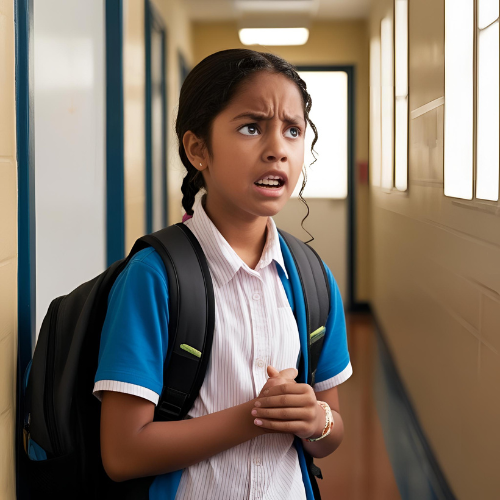
Lyssa is a 12-year-old student struggling academically and frequently disrupting lessons. She has failed multiple subjects, often requiring special exams to pass. She has few friends, influences them strongly, and is feared by other classmates due to her aggressive behavior. Coming from a wealthy family, she wears expensive, sometimes provocative clothing, which her mother fully supports. The school has no contact with her father, and her mother dismisses concerns about her behavior and absences. Lyssa refuses counseling, often isolates herself with her phone, and gets into fights during breaks, suggesting deeper emotional struggles.

Signs of Student Disengagement
Lyssa, a 12-year-old student, exhibits severe academic underperformance and behavioral issues that indicate a high level of disengagement from school. She struggles with even the simplest questions and frequently fails her subjects, requiring special exams to progress to the next grade. Despite these academic difficulties, she shows no motivation to improve, often laughing inappropriately during lessons, openly displaying disinterest, and intentionally disrupting classes when she feels bored. Her confrontational attitude toward teachers and frequent arguments further reinforce her disengagement. She has been transferred between multiple classes due to her behavioral problems, yet these issues persist in her current environment. In addition to her academic struggles, Lyssa's interactions with peers are problematic; she has only two close friends, over whom she holds significant influence, while the rest of the students are intimidated by her. During breaks, she frequently engages in fights, even with boys, and demonstrates aggressive tendencies and mood swings. She also refuses support from the school counselor and psychologist, remaining silent or dismissive when required to attend sessions. The lack of any formal diagnostic evaluations makes it difficult to determine if there are underlying cognitive or emotional disorders contributing to her behavior, but her actions suggest a strong resistance to authority and structured learning. 

Learning Style
Observations from the teaching staff suggest that Lyssa does not engage with conventional learning methods. She does not participate actively in lessons and often ignores both the teacher and her classmates. Her behavior fluctuates between complete disinterest, where she focuses solely on her mobile phone, and moments of active disruption, where she purposefully seeks attention through inappropriate laughter, arguments, or provocations. She does not respond positively to traditional instruction, and attempts to involve her in group activities have proven difficult due to her tendency to dominate her two close friends while distancing herself from the rest of the class. Teachers note that when she does not feel challenged or entertained, she quickly loses focus and resorts to disruptive behaviors. However, there is little evidence of any sustained effort on her part to engage with learning material, suggesting a lack of both intrinsic and extrinsic motivation. Since she refuses intervention from school professionals, identifying effective strategies to support her learning remains a significant challenge.

Personal Challenge
Lyssa comes from a wealthy family, and her socio-economic status is reflected in her expensive and often provocative clothing, as well as her use of high-end personal items, including makeup and accessories that set her apart from her peers. Her mother, with whom the school has frequent but unproductive contact, does not acknowledge any issues with her daughter’s behavior, dress, or academic performance. She permits Lyssa to wear makeup and expensive clothing and does not take her absences from school seriously. The school has no contact with Lyssa’s father, and the mother refuses to discuss him, leaving questions about family dynamics unanswered. The lack of parental cooperation makes it extremely difficult to implement any meaningful interventions, as any attempts to address Lyssa’s issues are met with resistance or dismissal from her primary caregiver. Without proper family support or willingness to acknowledge the problem, Lyssa continues to struggle with social relationships, academic progress, and behavioral regulation. Her aggression, mood swings, and reluctance to accept guidance suggest deeper emotional struggles that remain unaddressed, increasing the risk of continued disengagement and further disciplinary actions.

Data Collection Methods

Tools Teachers Used to Observe Lyssa’s Learning and Behavior
Teachers and school staff use multiple data collection methods to assess Lyssa’s academic performance, behavior, and social interactions. Observational records track her classroom engagement, disruptions, and interactions with peers. Grade reports and exam results highlight her academic struggles and frequent need for special exams. Behavioral incident reports document her conflicts, aggression, and disciplinary actions. Attendance records reveal her frequent absences, and communication logs with her mother show the family's lack of cooperation. Additionally, informal teacher discussions provide insights into patterns of disengagement, while unsuccessful counseling attempts indicate her refusal to seek support. These combined methods create a comprehensive picture of Lyssa’s challenges.

Subjects involved

Student’s Perspective
Lyssa does not see a problem with her behavior or academic disengagement. She likely perceives school as a restrictive environment where she has little control, leading her to rebel against authority figures. She enjoys the influence she has over her two close friends and may use her dominance as a way to feel in control. Her aggressive behavior, mood swings, and confrontational nature could stem from unresolved emotional struggles, but she refuses to acknowledge them or seek help. She might also feel disconnected from her peers, using defiance and disruption as a way to protect herself from vulnerability. Her provocative clothing and makeup could be her way of asserting independence or gaining attention, but they also signal a deeper need for recognition and validation. Despite her confident and rebellious exterior, her reluctance to speak to the school counselor or psychologist suggests she may be suppressing deeper issues. 

Teachers’ Perspective
Teachers see Lyssa as a highly challenging student who shows no interest in academic achievement, disrupts the learning environment, and refuses to engage in constructive behavior. Her refusal to participate in class, constant use of her mobile phone, and deliberate attempts to derail lessons make classroom management difficult. Teachers who are unfamiliar with her history may find her aggressive behavior, especially during conflicts with other students, particularly alarming. While some teachers recognize that her defiance and attention-seeking behaviors might stem from personal struggles, they also feel frustrated by the lack of support from her family, as meaningful intervention is nearly impossible without parental cooperation. Educators are concerned not only about her academic future but also about her negative influence on her two close friends and the fear she instills in other students. 

School Leaders’ Perspective
School administrators view Lyssa as a student with significant behavioral issues that disrupt the school environment. Her history of class transfers, frequent absences, and confrontational attitude make her a concern in terms of both discipline and student well-being. They recognize that she needs targeted intervention, but without parental cooperation, their options are limited. While school leaders prioritize maintaining a safe and productive learning environment for all students, Lyssa’s behavior presents a challenge because standard disciplinary measures have had little effect. They are also concerned about the school’s inability to reach her father and the mother’s dismissive attitude. Since Lyssa has refused counseling and intervention, school leaders may be considering whether alternative educational settings or stricter disciplinary measures are necessary to prevent further disruption.  

Counselors’ Perspective
The school counselor sees Lyssa as a student in need of emotional and behavioral support but is frustrated by her resistance to help. The fact that she has repeatedly refused to engage in counseling sessions or psychological assessments makes it difficult to identify the root causes of her behavior. Her aggression, mood swings, and lack of motivation could be linked to deeper emotional struggles, possibly related to her family situation, but without her cooperation, the counselor cannot properly assess or address these concerns. The lack of parental support further complicates intervention efforts. The counselor worries that if left unaddressed, Lyssa’s disengagement and behavioral problems may escalate, leading to further academic failure, social isolation, or even disciplinary expulsion. 

Parents’ Perspective
Lyssa’s mother does not see her daughter’s behavior as problematic and resists any suggestions from the school that intervention is necessary. She allows her to dress provocatively and wear makeup, dismisses concerns about absences, and does not acknowledge her academic struggles. She may feel that Lyssa is simply expressing her independence or going through a phase that does not require external interference. The lack of any mention of the father suggests there could be family issues that the mother does not want to discuss, possibly contributing to Lyssa’s emotional struggles. Despite frequent contact with the school, the mother’s unwillingness to engage in meaningful cooperation means that school interventions are largely ineffective. Without parental support, any attempt to help Lyssa is met with resistance, making it unlikely that her behavior will change unless external intervention is enforced.