Description
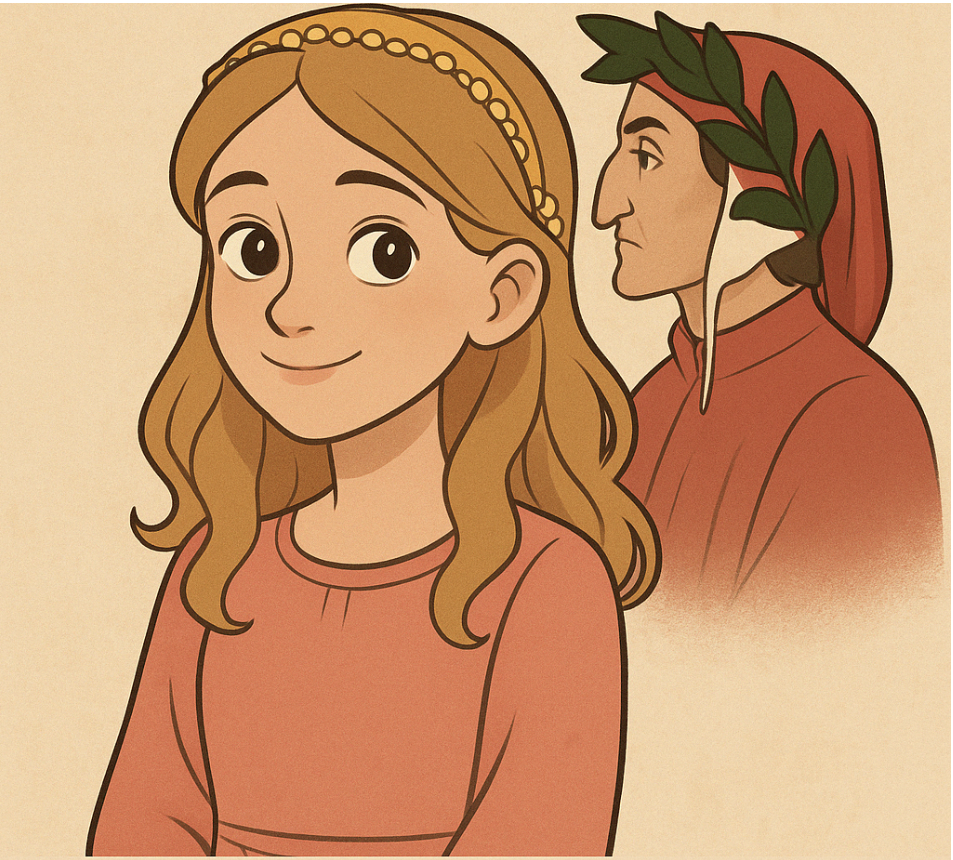
Beatrice, inspired by Dante Alighieri’s luminous guide in the Divine Comedy, symbolizes wisdom, kindness, and the power of empathy to lead others toward understanding. In this case study, Beatrice represents a student whose warmth, sociability, and quiet determination create harmony within her school community. Her name recalls Dante’s Beatrice — a presence of light and moral clarity — reflecting how care, inclusion, and gentle leadership can inspire both peers and teachers.
GENERAL OVERVIEW
Signs of Student Disengagement
Beatrice is a 13-year-old student with a complex neurodevelopmental profile due to a likely undiagnosed rare genetic condition. She has official diagnoses including Motor Dyspraxia, Mixed Specific Language Disorder, Moderate Intellectual Disability with genetic alteration, Growth Deficiency and Bilateral Sensorineural Hearing Loss. Despite these significant challenges, Beatrice is well-integrated in the school environment and displays a high level of motivation and enthusiasm toward learning and classroom life.
Body Functions and Structures
Beatrice has a rare genetic condition resulting in motor dyspraxia, bilateral sensorineural hearing loss, moderate intellectual disability, tremors, muscle spasms, and a specific language impairment. These conditions affect her fine motor skills and verbal communication. To support her, several strategies are used: frequent breaks to reduce fatigue, ergonomic writing supports, alternating between manual and digital writing, speech development exercises, and consistent use of her hearing aid. These interventions are essential for maintaining her engagement and reducing physical and cognitive overload.
Activities and Participation
Beatrice is actively engaged in classroom activities, particularly in structured and collaborative settings such as peer tutoring and cooperative learning. She faces challenges related to attention span and manual writing, which are addressed using visual aids, hands-on and digital tasks, chunking instructions into manageable steps, and providing consistent, simple verbal prompts. She thrives in group activities that are playful and varied, and her participation increases significantly when tasks are supported visually and reinforced positively.
Environmental Factors
Beatrice benefits from a supportive and inclusive classroom environment. The regular use of her personal tablet, quiet seating arrangements, and simplified materials (such as laminated sheets and visual schedules) create optimal learning conditions. Constant communication between school and family reinforces a sense of security and belonging. Teachers are mindful of background noise levels and strive to ensure Beatrice is positioned in quieter zones of the classroom where she can focus more easily.
Personal Factors
Beatrice is cheerful, empathetic, and highly motivated, though she is also emotionally sensitive, especially in situations where she feels excluded or not understood by peers. She has difficulty verbally expressing her emotions and relies on body language in times of stress. Strategies such as social stories, role-playing scenarios, and structured emotional literacy activities help her recognize, name, and express her feelings. Positive reinforcement and clear adult guidance help her develop social resilience and self-awareness.
Performance Indicators
Although Beatrice learns at a slower pace, her progress in communication, autonomy, and group interaction is evident. She shows strong long-term memory and observational skills, particularly in familiar routines. Her performance is monitored through simplified assessments and tailored feedback tools, using visuals and verbal cues to help her understand tasks. Success is measured not just by results but by her increasing ability to engage, complete tasks with support, and transfer learning across contexts.
Intervention Readiness
Beatrice is open to support and willing to engage with new learning methods, especially those involving technology or creative tasks. She shows increasing independence and often takes pride in demonstrating skills to peers. Effective strategies include regular check-ins, scaffolded activities, clear and predictable routines, and a combination of verbal and visual feedback. Her motivation to be part of the class community and her curiosity are key drivers in her learning process, making her highly responsive to inclusive practices.
Learning Style
Beatrice learns best in structured, multisensory, and interactive environments. She benefits from:
- Visual aids (pictures, symbols, PECS)
- Syllabic reading methods using visual supports
- Repetition of familiar tasks
- Peer-supported and cooperative learning
- Digital tools (iPad, word processors with speech support)
She thrives when actively engaged in hands-on, group-based activities and shows improved performance when the classroom context is inclusive and emotionally safe.
Personal Challenges
Beatrice is cheerful and affectionate, but sometimes experiences social misunderstandings, particularly with peers of the opposite gender or when she feels excluded from conversations. While she is generally embraced by her classmates, she occasionally withdraws during unstructured moments. Her emotional regulation still requires adult mediation, though she is encouraged to solve conflicts independently to foster autonomy.
From a cognitive standpoint, she has attention regulation difficulties, low working memory capacity, and delayed reading and writing skills. Her hearing impairment, only recently diagnosed, has significantly impacted language development. She demonstrates high visual perception, strong observational skills, and curiosity, compensating for her hearing loss with visual learning strategies.
Her fine motor difficulties, tremors, and spasms affect her handwriting and physical coordination, but she is determined and participates actively in physical activities like seated volleyball and rowing, with enthusiasm and growing self-confidence.